

Art Alive!
Developing an end-to-end experience that encourages youth to explore fine arts through interactive and immersive activities
Interaction & Service Design
Duration
10 weeks
March 2022 - May 2022
Role
Interaction Designer
Tools
Figma
Adobe Photoshop
Adobe After Effects
Adobe Premiere Pro
This project was completed as part of a graduate course in interaction design at the University of Washington in Spring 2022.
While our team of 3 master's students were highly collaborative, I led the idea proposal and development, and the creation of physical materials and digital assets. Because of my previous work and personal interests in art and child development and psychology, this project was particularly interesting and rewarding to work on.
Overview:
Art Alive! is an interactive art museum exhibit aimed toward children of all ages. Using augmented physical media animation, art pieces are brought to life! The experience also includes educational components that are intended to help grow a child’s relationship with art, regardless of their age, skill, or affinity level. Though this project is hypothetical in nature, we chose an existing local museum, the Frye Art Museum in Seattle, WA for the implementation of this exhibit.
Through careful consideration of the interactions between all involved parties and components, from museum staff, to teachers, to parents and children, to museum physical and digital infrastructure, we developed a realistic and thoughtful end-to-end experience.
Demo Video
Design Problem
Children are often introduced to the arts and sciences through interactive exhibitions and activities. Although interactive museums have been around for many years, many of these focus on science and technology. Not much work has been done to make traditional fine arts more engaging and interesting for children—after all, a renaissance fresco may be a harder sell than a planetarium light show, at least for children.
Design Objectives
In order to design a thoughtful experience, we set several goals that guided us throughout our process:
-
Create an interactive experience to make fine arts more accessible and engaging to young audiences.
-
Foster a greater connection between children and the arts.
-
Leverage technology to enhance the fine arts experience.
-
Facilitate a more welcoming and engaging environment and experience for visitors of all ages.
-
Offer opportunities for different ages, skill level, and affinity levels with both short and long-term benefits.
-
The parameters of this project were wide open; to develop a new experience for a museum based on observations from visits to local museums and evaluating their current successes and areas of improvement. While it may have been easiest to lean on new and cutting edge digital technologies for this new experience, our team wanted to prioritize realistic, authentic, and relatable experiences over the need to incorporate novel tech.
Why the Frye?
Subject matter
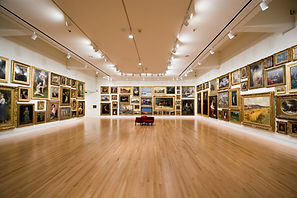
The Frye focuses on painting and sculpture from the nineteenth century to the present. This type of art is generally difficult for children to engage in and enjoy, and therefore offers an intriguing and productive challenge. A current exhibit, titled Human Nature, Animal Culture, seemed like a great fit for Art Alive! since children already enjoy and have an affinity toward animals and may already feel a heightened connection with the subject matter.
Values
As Seattle's only free art museum, the Frye museum prides itself on its accessibility to the community, civic responsibility, promotion of artistic inquiry, and rich visitor experience. The development of a method to make art more inclusive and accessible to children aligns well with these values.
Existing infrastructure & areas for growth
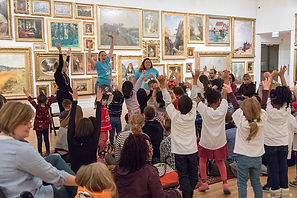
The Frye currently offers successful youth and school programs, meaning there is established interest and demand for the inclusion of children in the museum experience. These currently take place as learning experiences separate from a regular museum visit that require additional registration, commitment, and fees.
There are limited opportunities for children to engage and learn alongside their parents or guardians during a standard museum visit, meaning adult visitors may avoid bringing their children, or children who come along may often be bored and disengaged.
How and why does Art Alive! work?
Exciting & easy to use
After drawing or coloring a guided picture, their work is scanned and displayed on a high-quality digital version of the museum pieces. The scanner and software will recognize pre-programmed points on the drawing paper that it will use to animate the drawing. At first, the original painting is displayed, and then one of the elements in the painting will transform into the child’s drawing, and will move about the painting in dynamic, fun, and exciting ways.
Newfound connections from existing interests
By engaging with the art in this unique way and seeing their creations interacting and melding together with the original artwork, children will discover a new connection with the fine art pieces at the museum, whether they are completely new to the world of art or already have an established relationship and interest. Since most children already enjoy coloring and/or drawing, this experience and activity appeals to their natural inclinations. By using pieces that are part of a current exhibit at the Frye, children can enjoy the same art as their adult counterparts and facilitate a holistic visit and encourage connection and conversations between children and their parents or guardians who visit the museum.


Design Process:
Before designing any elements of the experience we wanted to holistically understand both our target users and other actors and elements within the systems with which we are working. By developing mindsets, storyboards, and a service blueprint, we were able to dissect and consider touch points throughout the experience, from pre to post-visit.
Mindsets
To better understand the needs of our primary users, we created two mindsets that were informed by observational field trips to local Seattle museums, including the Frye museum. While not meant to be all-encompassing, these mindsets guided our thinking, as we considered the interplay of some of the main characteristics of our target users and how we can address them in our design.


Storyboards
We developed 2 storyboards that helped our team see the mindsets in action. These helped us design and iterate how the service and interaction could happen as seamlessly as possible. Several elements in these storyboard changed and evolved over time.


Service Blueprint
Most helpful in evaluating the holistic experience was our service blueprint. We outlined the experience and touch points end to end, front to back and across channels, giving us a high-level view of the experience and a detailed view of what is going on below the surface, including interactions between both human and non-human components.

Low-Fidelity Designs
The first designs that we developed incorporated key insights from the above discovery methods. These low-fidelity designs went through further iteration to reach our final proposal, but several key elements remain constant.
Specialized papers
I developed these papers with appropriate ease of use for a child in mind. It could not be complicated or unfamiliar to a young child while also working with the technical systems needed for the exhibit. I decided to make two variants for differing age levels and art experience for optimal accessibility and inclusivity.
A designated drawing zone with guides provide the child with simple guidelines to follow. Registration marks on the corners of paper allow the scanning and processing system to recognize, orient, and animate the drawings. QR codes allow online access to art after scanning.

Scanner
We initially had two ideas for our scanner system that would scan and upload the drawings to be processed. One involved the use of an iPad, which would require an adult or museum employee to operate, and the other was a more automated system that did not necessarily require adult supervision. We decided to further iterate on the option that did not require adult supervision, since it was the more flexible option for both visitors and museum staff

Table and room layout
We laid out the drawing table set up to be able to house all materials that a child might need to complete their drawings. This would reduce the amount of traffic around the room in addition to making it easier for the children since everything is in front of them. The tables were positioned in a way where children would be able to see the mains screen up front so that they could see the end product and get inspired.


Final Design:
After several rounds of iteration, which included critique and feedback sessions, we developed a comprehensive proposal for Art Alive! While we did not speak to the museum for this hypothetical project, the materials developed are designed to be ready for a formal pitch.
Key Components
Specialized paper: Art Alive! uses specialized drawing and coloring paper that has guides for children to follow and registration marks to correctly scan and animate their creations. 2 variants of these papers accommodate varying ages and experience level with art. They include fun facts and questions to get children's minds engaged and interested along with instructions to access their art online after their museum visit.


Scanner: The scanner used to process the drawings has a tray so that large batches of papers can be fed in at once and automatically scanned. The buttons are also large and child-friendly in the case that a museum staff member is not present to operate it.

Tables & chairs: Long tables that fit 6 children (3 on each side) will be used. These tables can be placed separately or adjacent to each other to create a long table, depending on group needs. I chose the materials and dimensions of the furniture to both uphold the aesthetic values of an art museum while standing up to the wear and tear of everyday use by children.
Art materials: Art materials (colored pencils, markers, crayons) will be provided at each table by the museum

Table: Easy to move but sturdy. Finished with matte polymeric cover for easy clean up. Can be shifted around the space for different modular set ups (e.g. separate tables, two tables set adjacent to each other to make a long table).
-
Legs: Polypropylene with glass fiber added
-
Table top: Medium-density fiberboard with polymeric cover
Stools: Height adjustable (via rotation of seat) to accomodate children of different size and age. Swivel seat allows for children to easily look around the room.
Base: Die-cast aluminum with stainless steel fasteners
Seat: Polished or powder coated aluminum
Screen: Artwork will be displayed on a high resolution OLED screen. Extra screens are present in the room for additional programming or displaying previous visitor’s drawings in a virtual gallery.
Website: Children’s drawings and animations can be accessed online after their visit via the password and QR code/link on the drawing papers. Both individual art and a complete gallery of past art can be viewed. I developed these prototypes for the implementation of Art Alive! on the Frye's existing website, taking into account different ways in which children and their families might want to interact with their art and learn about the exhibit


After entering their password and viewing their art, the user will be brought to a separate page with only an image of their artwork ‘in-action’.
Visitors can add their name and age to their artwork if they wish. This can be changed on the page at any time. They also have the option to publish their art to the public gallery and museum archive. They are also able to share and download their artwork.

Visitors are able to view a gallery of published artwork for each exhibit. The gallery can be filtered by the original artwork and sorted by date created and by (child) artist name. Individual pieces can be view in detail by selecting them from the gallery.
Instructional guide: To help parents, guardians, instructors, teachers, and other adults that may accompany or bring children to Art Alive!, an instructional guide will be offered, both digitally on the website, and physically at the museum.

Animation
Using an existing painting in the Frye's Human Nature, Animal Culture exhibit, we created an animation using Adobe After Effects to demonstrate how a child's artwork would come to life. These animations would be displayed on the large screen in the exhibit and also in the online gallery.
Location & Space Layout
Using both observations during our visit to the Frye and their existing floor plan, we proposed a location and layout for the exhibit. The room chosen is currently being used as a transitory use-as-needed space and does not house any permanent exhibits.
.png)


3D mockups of outside the Art Alive! exhibit and entering the room. The original art pieces are displayed on the wall beside the entrance (left image) and the art tables and screen can be seen inside the room (right image)

We constructed a paper model of the exhibit space that provides an additional reference for how the space could be laid out along with demonstrating how the animation would look displayed on the main screen.
Current & Future Applications
Though this experience can be adapted to different exhibits that the Frye Museum might have, we are applying it to their current exhibit, Human Nature, Animal Culture. This exhibit encourages visitors to understand our past, present, and future relationships with our fellow creatures and reevaluate the roles animals have played in our lives and includes many paintings of familiar domestic and tamed animals, such as dogs, horses, chickens, and ducks.
Since many children already enjoy and have an affinity toward animals, they may already have a greater interest in this exhibit and the pieces in it. Drawing and coloring familiar animals are common pastimes and hobbies for children, and so there may be a stronger connection to be made with the art by engaging in this familiar and enjoyable activity.
We encourage Art Alive! to be used to feature museum exhibits and pieces that feature a subject matter that may be naturally appealing to children.
Pieces from Human Nature, Animal Culture

Percival Rosseau. Two Gordon Setters in a Field, 1904. Oil on canvas. 23 3/4 x 32 1/4 in. Founding Collection.

Alexander Max Koester. Ducks in Green Water, ca. 1910–13. Oil on canvas. 25 x 38 in. Founding Collection.
Final Deliverables
This 25-page document details all proposed elements of Art Alive! along with the background, goals, and rationale for its implementation.
This document includes the different drawing papers that I created based on different animals from paintings in the Human Nature, Animal Culture exhibit.
Final notes & reflection
This project was incredible an incredibly fun and rewarding way to grow as a thoughtful designer while combining my love of art and drawing with my experience working children and interest in truly accessible and inclusive spaces in an innovative yet realistic capacity. When I first proposed the concept behind Art Alive! it seemed like a much simpler idea than others, since it did not rely on any complex technology or systems. However, I quickly learned that even this seemingly simple concept requires consideration of a rich ecosystem of factors, actors, and interactions. Learning to bring to light, think through, and incorporate and apply these elements and insights might be my largest takeaway from this experience.
While no formal research was included in the scope of this project (time, resource, and course restraints), I would ideally hope to conducts several stages of research during the development of Art Alive! This would include gauging initial interest from both the museum and visitors (adults and children) and iterative concept.